


If your child already knows the Arabic letters but stops dead when they see a real word, the missing piece is usually the harakat: the small marks above and below the letters that tell you which vowel to say. The first one to learn is the fatha.
Below are 10 free fatha worksheets you can print today, in A4 and US Letter. They go from simply meeting the fatha to reading real Arabic words with it, so you can do one a day or a few in one sitting.
What is the fatha?
The fatha (فَتْحَة) is a small slanted line written above a letter. It adds a short “a” sound, like the a in “cat”. So بَ is “ba”, مَ is “ma” and كَ is “ka”.
Its name comes from the word for “opening”, because your mouth opens when you say it. Children like knowing that, and it helps them remember which mark it is.
How to teach it in 15 minutes a day
Start with the sound, not the worksheet. Say “ba, ta, tha” together and let your child copy you. Then show the letter chart and point as you read. Once the sounds feel easy, move to the sheets where they have to find, match and colour the sounds on their own.
Keep it short. Two sheets and a game of bingo is plenty for one day, and stopping while they are still enjoying it works far better than one long session.
The 10 free fatha worksheets
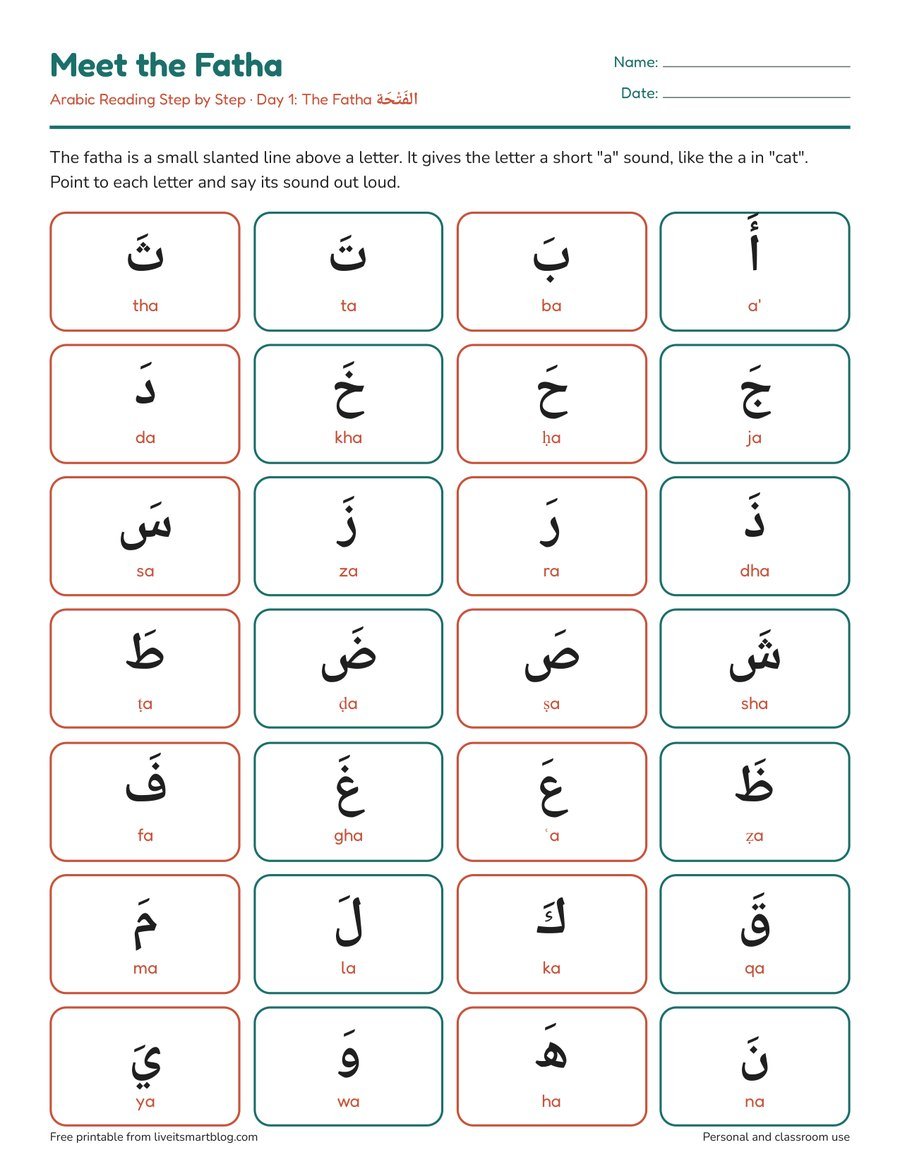
1. Fatha letter chart
A chart of all 28 Arabic letters with a fatha and the sound each one makes. Stick it on the fridge or next to the study table and read it together every day.
Download (US Letter) · Download (A4)
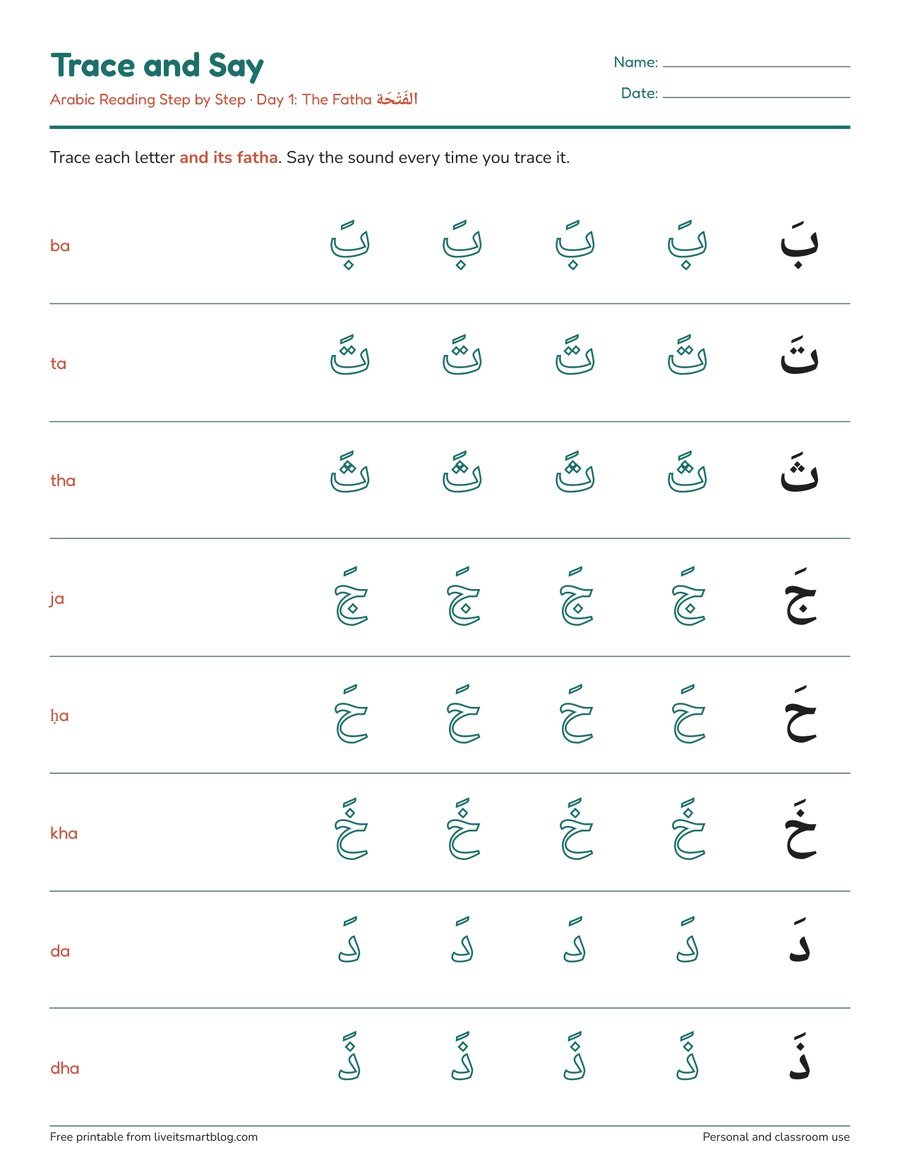
2. Trace and Say
Eight letters to trace, fatha included, with a solid model at the start of every row. Saying the sound while tracing is the whole point, so do it out loud.
Download (US Letter) · Download (A4)
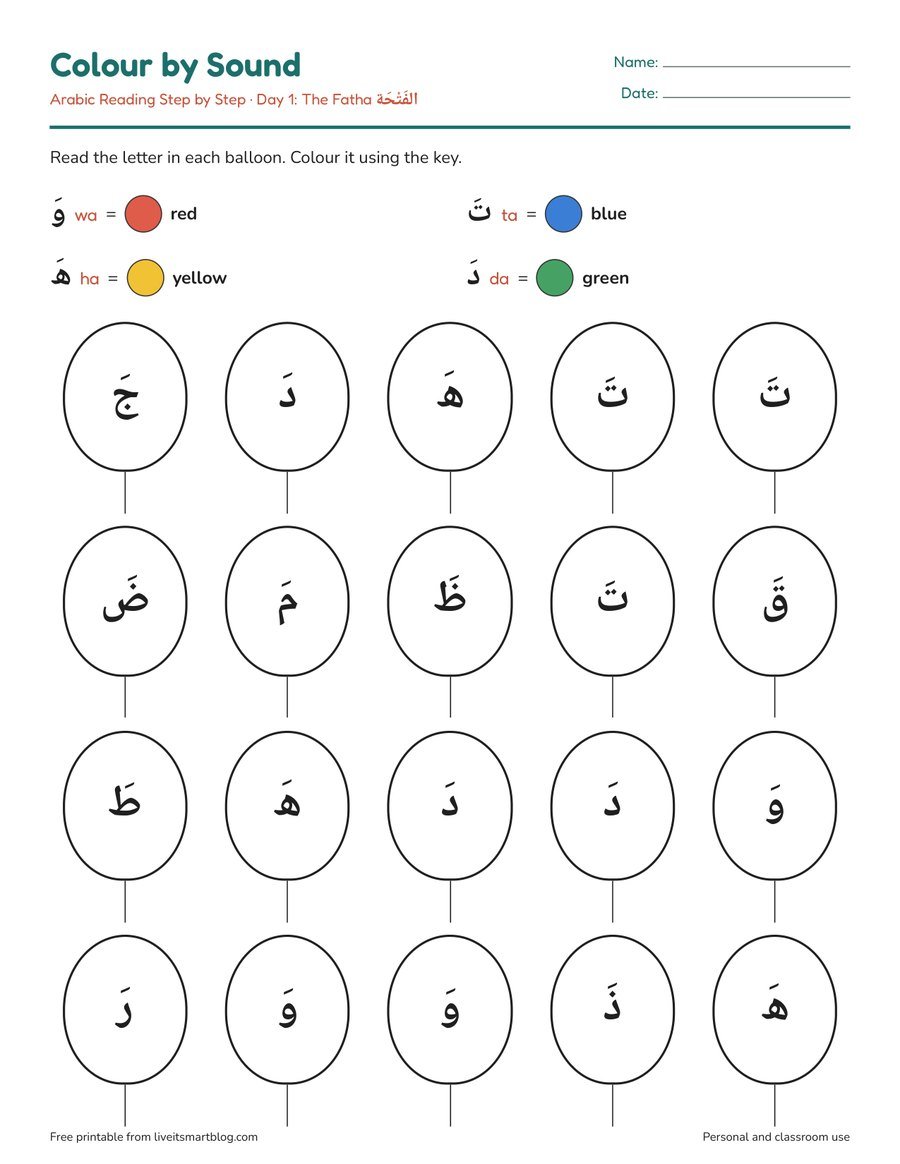
3. Colour by Sound
Twenty balloons and four sounds in the colour key. Your child has to read every balloon before deciding its colour, which makes it a quiet reading exercise in disguise.
Download (US Letter) · Download (A4)
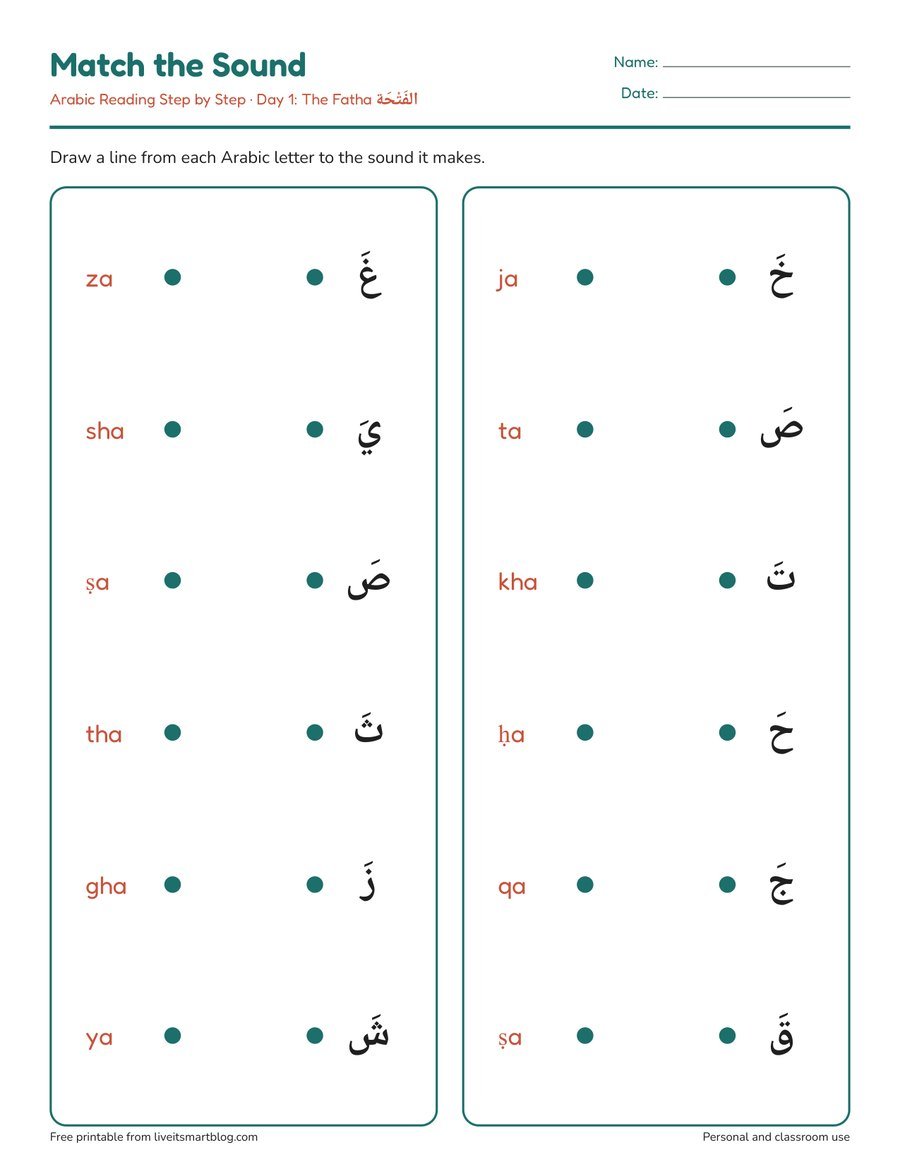
4. Match the Sound
Two sets of six letters to match to their sounds. Good for checking what has stuck after a few days.
Download (US Letter) · Download (A4)
5. Letter Hunt
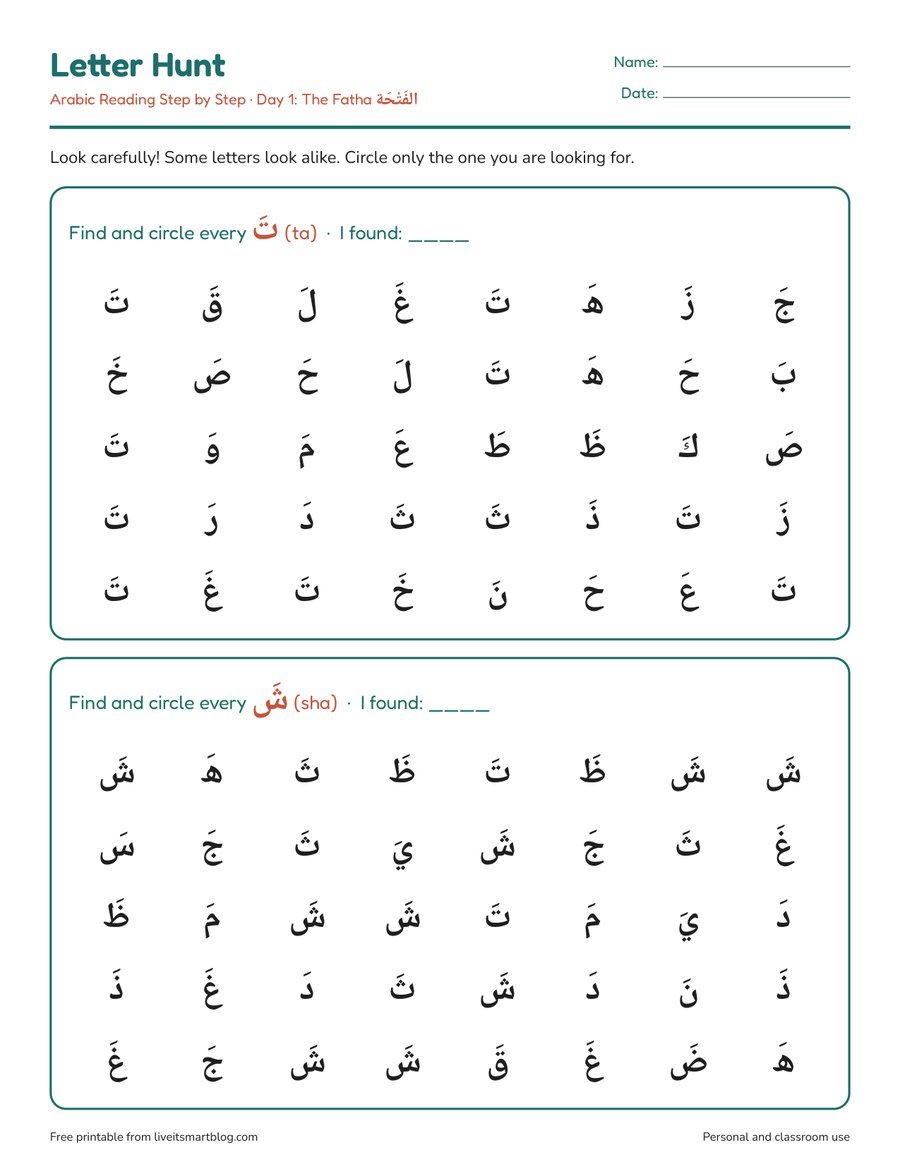
Two hunts for one letter with a fatha, hidden among others that look like it. This is where children learn to look at the dots carefully.
Download (US Letter) · Download (A4)
6. Alphabet Path
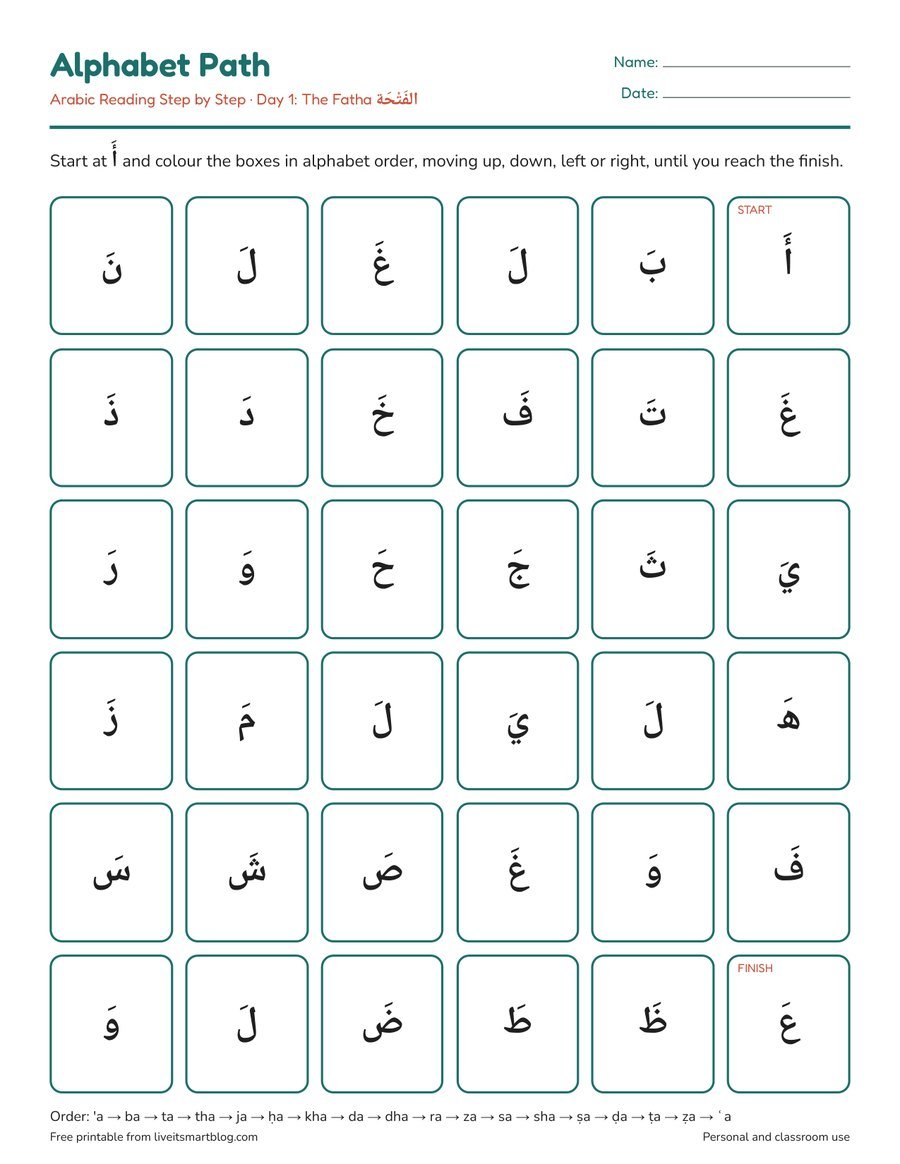
Start at the first letter and colour your way through the alphabet, one box at a time, up, down, left or right. It practises letter order as well as the fatha.
Download (US Letter) · Download (A4)
7. Fatha Flashcards
All 28 letters with a fatha on two pages of cards, plus blank cards for your own. Cut them out for quick daily practice or a memory game.

Download (US Letter) · Download (A4)
8. Fatha Sound Bingo
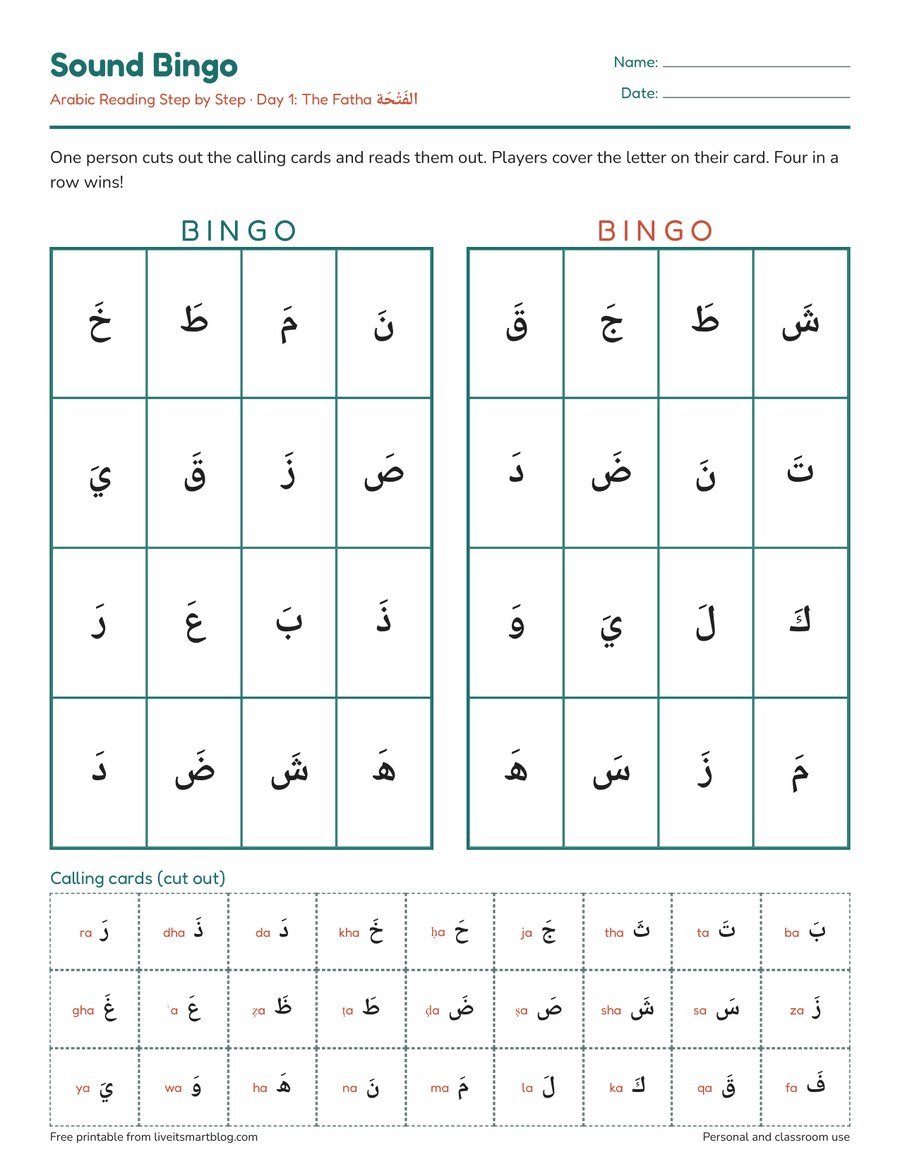
Two bingo cards and a set of calling cards. A sibling, a parent or a whole class can play.
Download (US Letter) · Download (A4)
9. Read and Match + Read, Trace, Write
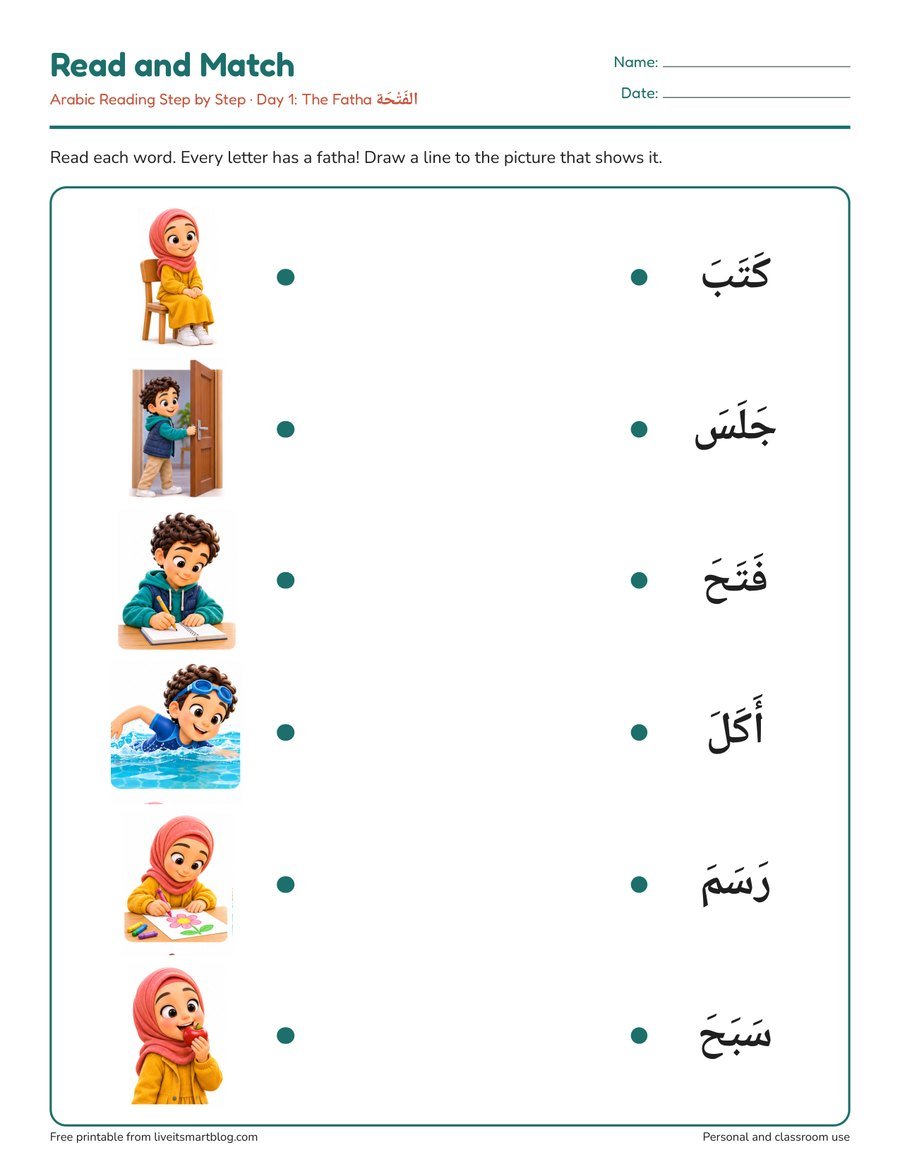
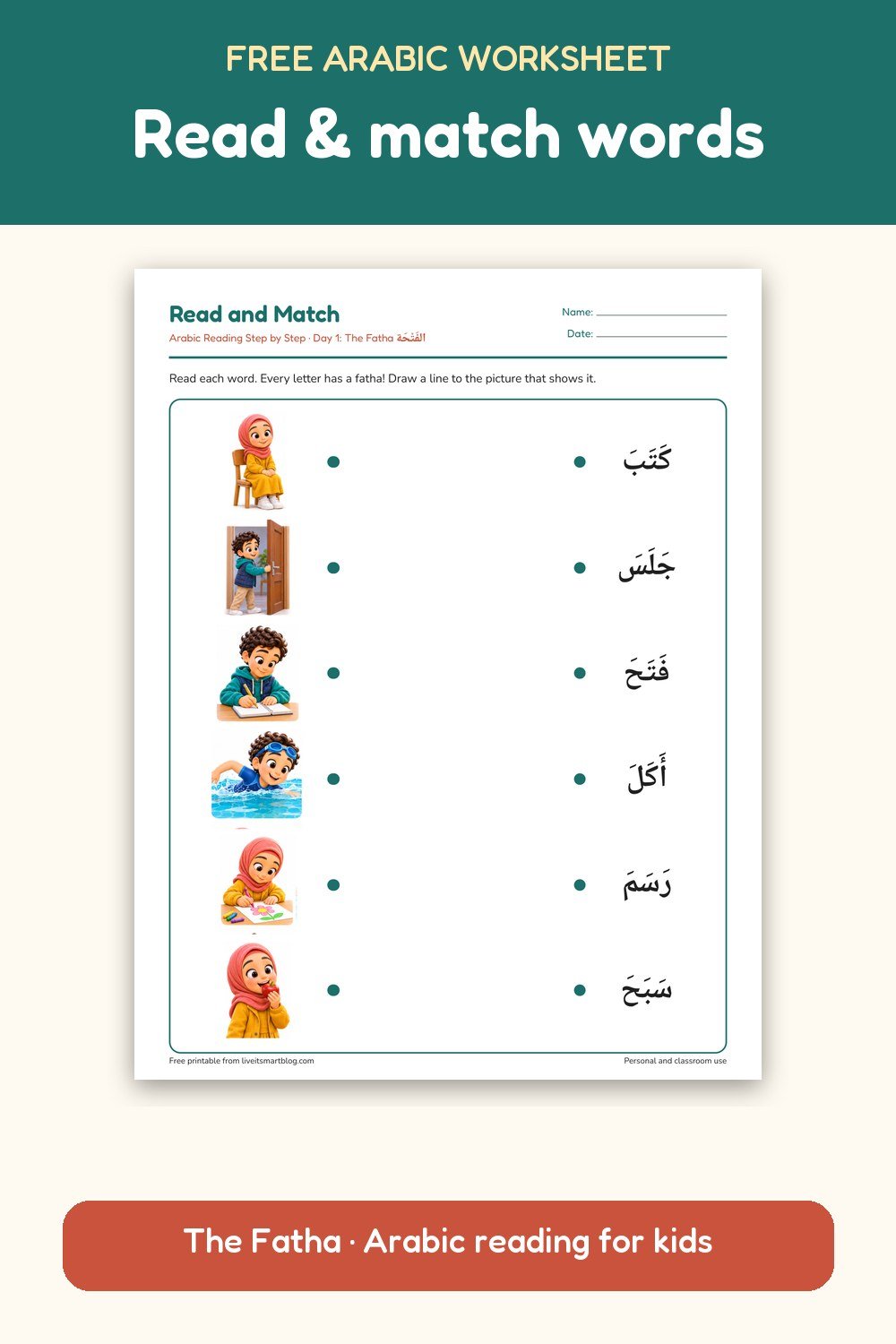
Twelve real Arabic words that only use the fatha, like كَتَبَ (wrote) and جَلَسَ (sat). Match six to their pictures, then read, trace and write the other six.
Download (US Letter) · Download (A4)
10. Fold-and-Read Mini Book
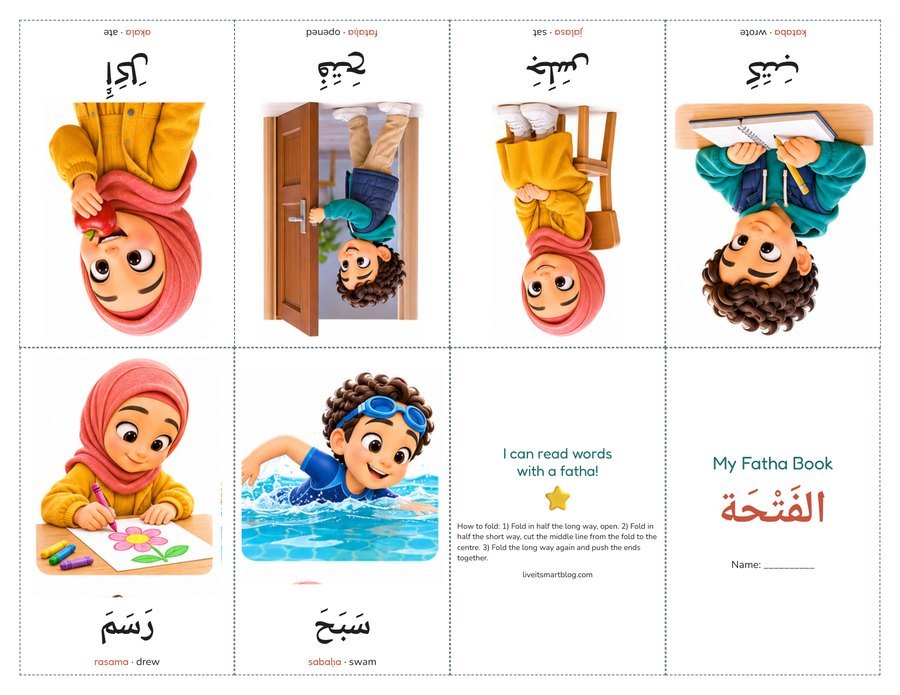
One sheet that folds into an 8-page little book with six fatha words and pictures. Folding steps are printed on the back page.
Download (US Letter) · Download (A4)
Tips that make a real difference
Say the sound every time they trace or colour, out loud. The hand and the voice working together is what makes it stick.
Watch the letters that look alike: بَ تَ ثَ, جَ حَ خَ, دَ ذَ. The letter hunt sheet is there for exactly this, so don’t skip it if your child mixes them up.
And when they read their first word, كَتَبَ, make a big deal of it. Three letters and three fathas, and they have just read Arabic.
What comes next
This is day 1 of our Arabic Reading Step by Step series. Next comes the kasra, then the damma, and then words that mix all three. If your child is still learning the letters themselves, start with our Arabic alphabet worksheets first. Looking for something for the whole year? Our Muslim kids planner for 2027 adds four Arabic words to every month.
These printables are free for personal and classroom use. Please share the link to this page rather than the files.
Want to come back to this later? Save it to your Pinterest board.


No Comments